
Can Customers Actually Read Your Storefront Sign? The 10-Second Visibility Test
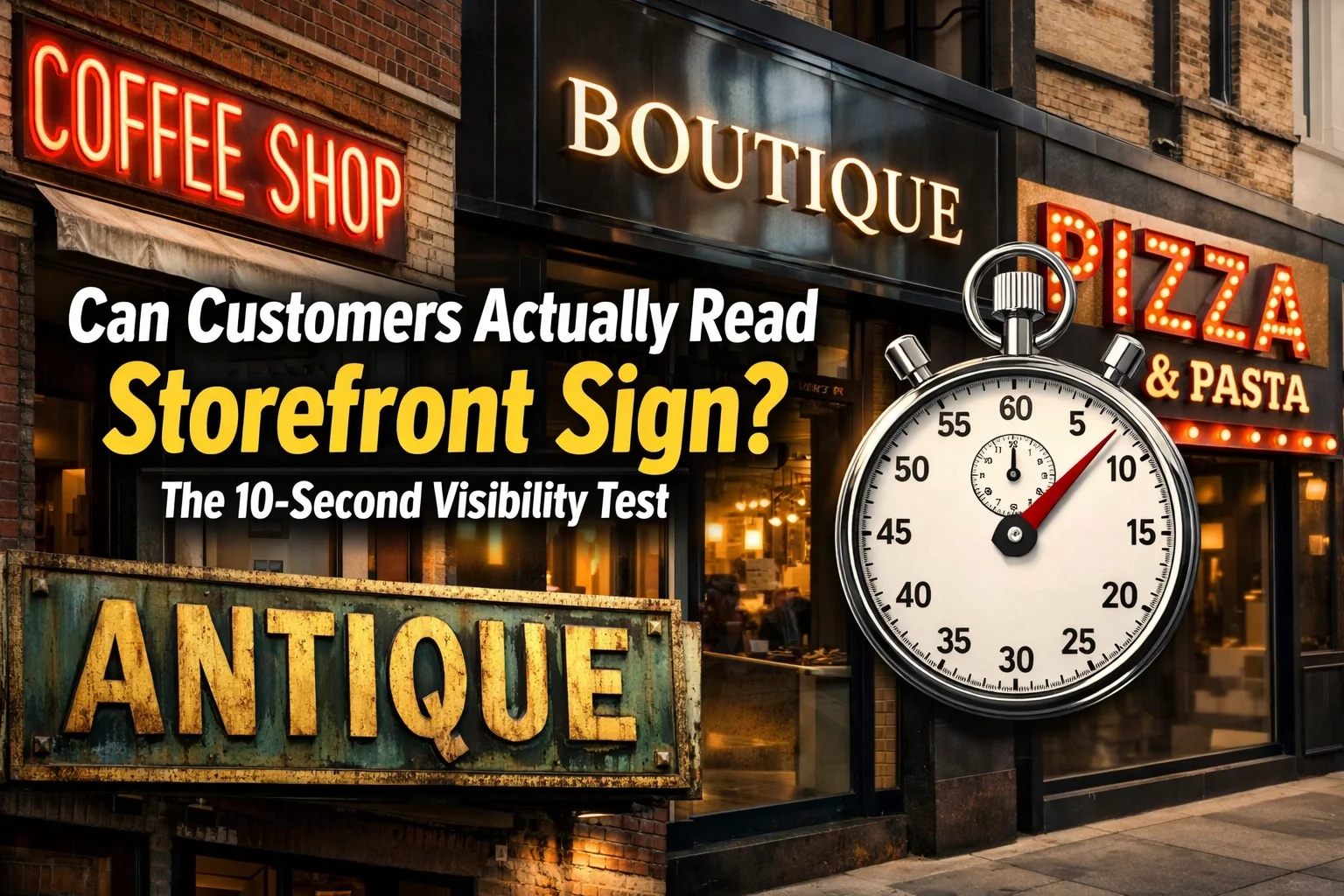
You invested in a storefront sign to attract customers. But here's the uncomfortable question most business owners don't ask: Can anyone actually read it?
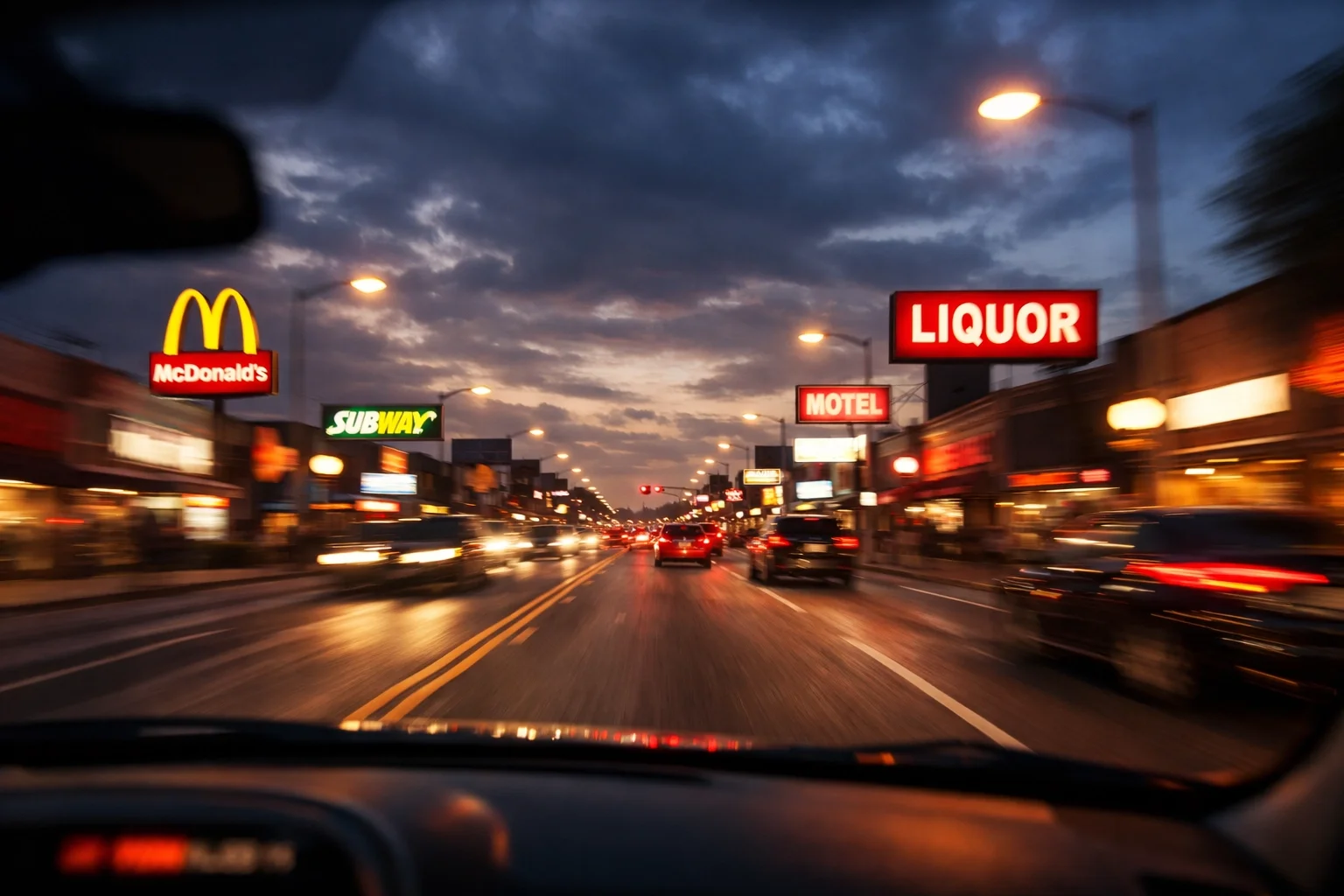
Every day, potential customers drive past your business at 30–40 mph, glance at your storefront, and make a split-second decision about whether to stop. If they can't read your sign in that brief window, you're invisible: and that's costing you foot traffic, sales, and brand recognition.
The good news? There's a simple way to find out if your storefront signs are working or failing.
What Is the 10-Second Visibility Test?
The 10-second visibility test: sometimes called the "drive-by test": is exactly what it sounds like. You evaluate whether a first-time visitor can see, read, and understand your sign within 10 seconds of approaching your business.
Here's why that matters: Studies show that drivers traveling at 35 mph cover about 51 feet per second. If your sign isn't readable from at least 100–150 feet away, drivers won't have enough time to process your message, slow down, and decide to pull in.
Most small business owners never test this. They approve a design, pay for installation, and assume it's working: until months later when they realize foot traffic is lower than expected.
Why Sign Visibility Directly Impacts Your Bottom Line
Your business signs serve one critical function: they turn passersby into customers. When your sign fails the visibility test, you're losing potential revenue every single day.
Consider this scenario: A retail shop on a busy street with 5,000 vehicles passing daily. If just 2% of drivers can't read the sign clearly and would have stopped otherwise, that's 100 lost opportunities per day: 36,500 per year. Even if only a fraction of those would convert to sales, the cumulative impact is significant.
Visibility issues typically fall into three categories:
Size problems: Letters are too small to read at driving speed
Contrast problems: Colors blend together or fade into the background
Lighting problems: The sign disappears after dark
Let's break down each one: and how to fix them.
The Three Core Factors That Determine Sign Readability
1. Letter Height and Viewing Distance
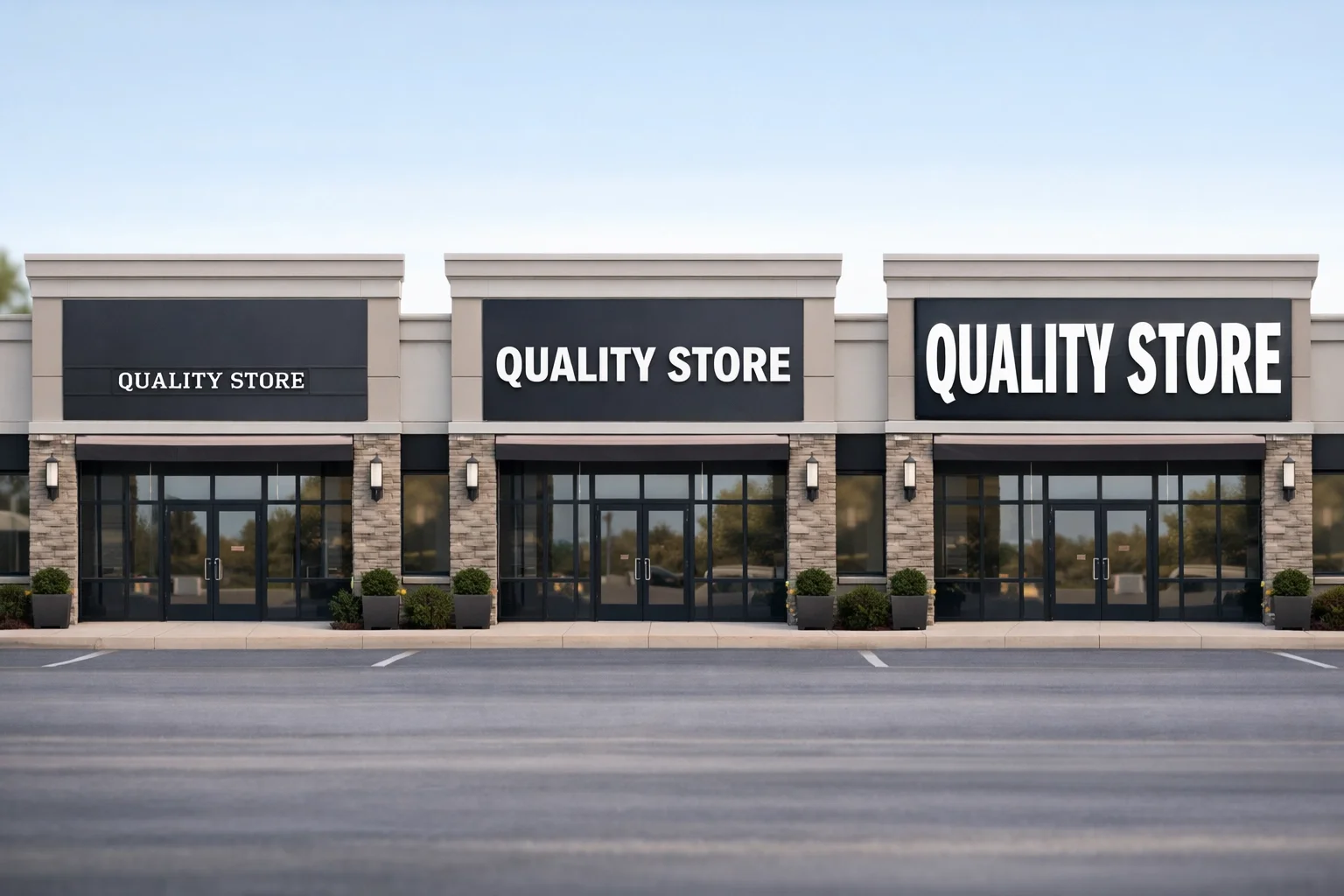
The sign industry uses a simple rule: one inch of letter height equals approximately 10 feet of readable distance. If your business sits 40 feet back from the road, you need letters at least 4 inches tall. If it's 100 feet back, you need 10-inch letters minimum.
This is where most custom signs fail. Business owners choose fonts that look great up close but become illegible from the road. Ornate scripts, thin fonts, and tightly-spaced lettering all reduce readability.
Here's a quick reference guide:
50 feet viewing distance = 5-inch minimum letter height
100 feet viewing distance = 10-inch minimum letter height
200 feet viewing distance = 20-inch minimum letter height
300+ feet viewing distance = 30+ inch minimum letter height
Keep in mind these are minimums for basic readability. For high-speed roads or complex messages, you'll need larger letters.
2. Color Contrast and Background
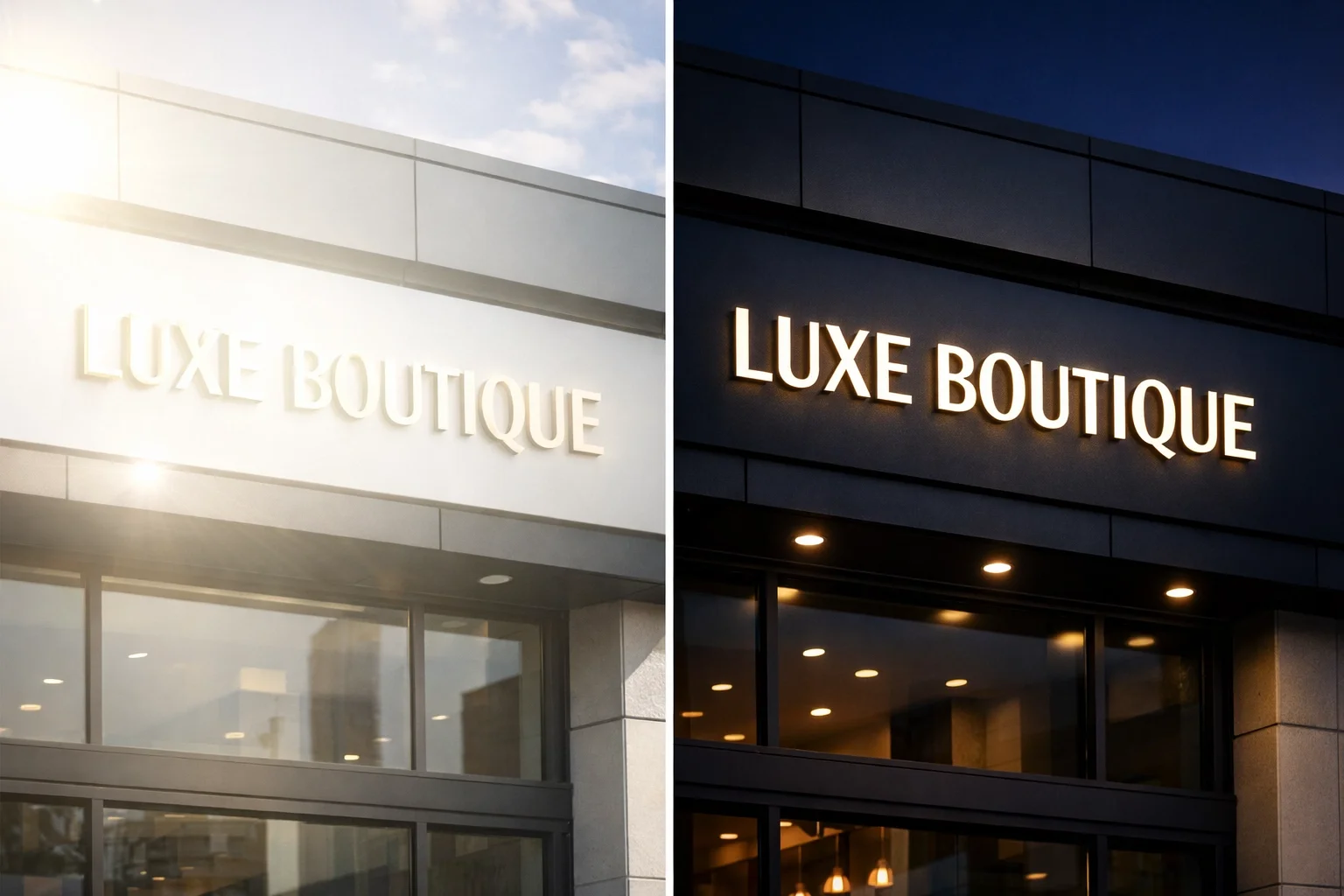
High contrast is non-negotiable. Your eyes naturally gravitate toward stark differences: black on white, white on black, or white on dark blue. These combinations work because the contrast ratio is high enough to remain visible even in challenging conditions like bright sunlight or glare.
Low-contrast combinations fail the visibility test:
Light gray on white
Dark blue on black
Yellow on white (washes out in sunlight)
Red on brown (hard to distinguish)
If your sign uses multiple colors, test them in different lighting conditions. Colors that look bold in the morning can fade into near-invisibility by mid-afternoon when the sun hits them directly.
The background behind your sign matters just as much as the sign itself. A white sign mounted against a white building disappears. Dark lettering on a brick wall can blend in depending on the brick color. When we design custom business signs at Jungle Signs, we always consider the mounting surface and surrounding environment.
3. Lighting and Nighttime Visibility
Here's a sobering statistic: approximately half of retail foot traffic happens between 5 PM and 9 PM, especially for restaurants, bars, and service businesses. If your sign isn't lit, you're invisible during your busiest hours.
Unlit signs create two problems. First, they disappear entirely after dark. Second, even during dusk or overcast days, they become harder to read than illuminated alternatives.
Lighting options include:
Internal illumination: LED-lit channel letters or cabinet signs that glow from within
External spotlights: Lights mounted to shine on the sign face
Halo lighting: Backlighting that creates a glowing outline effect
LED technology has made illuminated signs more affordable and energy-efficient than ever. A well-lit sign pays for itself through extended visibility hours and increased customer traffic during evening hours.
How to Conduct Your Own 10-Second Visibility Test
Testing your sign takes less than 30 minutes, but the insights can transform your business visibility. Here's how to do it properly:
Step 1: Test from the driver's perspective. Get in your car and approach your business from every direction a customer might come from. Drive at normal traffic speeds: don't slow down. Can you read your sign clearly? Can you process the message before you pass it?
Step 2: Test at different times of day. Repeat the drive-by test in morning light, afternoon sun, dusk, and full darkness. Signs that look fine at 10 AM might become unreadable by 4 PM when the sun creates glare, or by 8 PM when it's pitch black.
Step 3: Test from pedestrian sightlines. Walk down the sidewalk as a potential customer would. Is your sign visible from 50 feet away? From across the street? Are there any obstructions: tree branches, utility poles, parked vehicles: that block the view?
Step 4: Ask honest feedback from someone unfamiliar with your business. Show them your storefront and ask what they notice first. If they don't immediately mention your sign, or if they struggle to read it, you have a problem.
Step 5: Check for environmental interference. Does morning sun create glare on your sign face? Do nearby competing signs draw attention away? Is your sign mounted too high or too low for optimal viewing angles?
If your sign fails any part of this test, it's time for an upgrade.
What to Do When Your Sign Fails the Test
Failing the visibility test doesn't mean starting from scratch. Depending on the specific issues, you have several options:
If the problem is size: Upgrading to larger letters or a bigger sign cabinet can dramatically improve readability. Sometimes this means replacing the entire sign; other times, you can modify the existing structure.
If the problem is contrast: Repainting or re-facing your sign with high-contrast colors is often the most cost-effective fix. We've seen businesses double their visibility with nothing more than a color change.
If the problem is lighting: Adding LED illumination transforms an invisible nighttime sign into a 24-hour marketing asset. Modern LED systems are energy-efficient and can last 50,000+ hours.
If the problem is placement: Sometimes the sign location itself is the issue. Moving it closer to the road, mounting it higher, or adding a secondary monument sign at the street can solve visibility problems.
Why Professional Sign Installation Makes the Difference
Sign installation isn't just about mounting a sign to a wall. Professional installers understand viewing angles, local regulations, structural requirements, and how to position signs for maximum visibility.
We've seen business owners try DIY installation only to realize their perfectly-designed sign is mounted at the wrong height, facing the wrong direction, or obstructed by elements they didn't consider during planning.
At Jungle Signs, we handle everything from design to fabrication to final installation. When we evaluate your location, we perform visibility assessments as part of the process: identifying potential problems before manufacturing begins, not after installation is complete.
Get Your Sign Visibility Tested in 24 Hours
If you're unsure whether your current sign is working: or if you're planning new signage and want to get it right the first time: we can help.
Jungle Signs specializes in custom signs and business signs for small and medium businesses throughout the lower 48 United States. We handle design, fabrication, and installation, ensuring your sign passes the 10-second visibility test before we ever mount it to your building.
Here's how we work: Send us a photo of your storefront and tell us what you want to accomplish. Within 24 hours, we'll come back with design concepts, visibility recommendations, and a clear quote. No pressure, no hassle: just straightforward guidance from sign professionals who understand what works.
Your sign is often the first: and sometimes only: impression you make on potential customers. Make sure it's readable.
Ready to upgrade your visibility? Contact Jungle Signs today for a free consultation and 24-hour quote on storefront signs that actually get noticed.
